
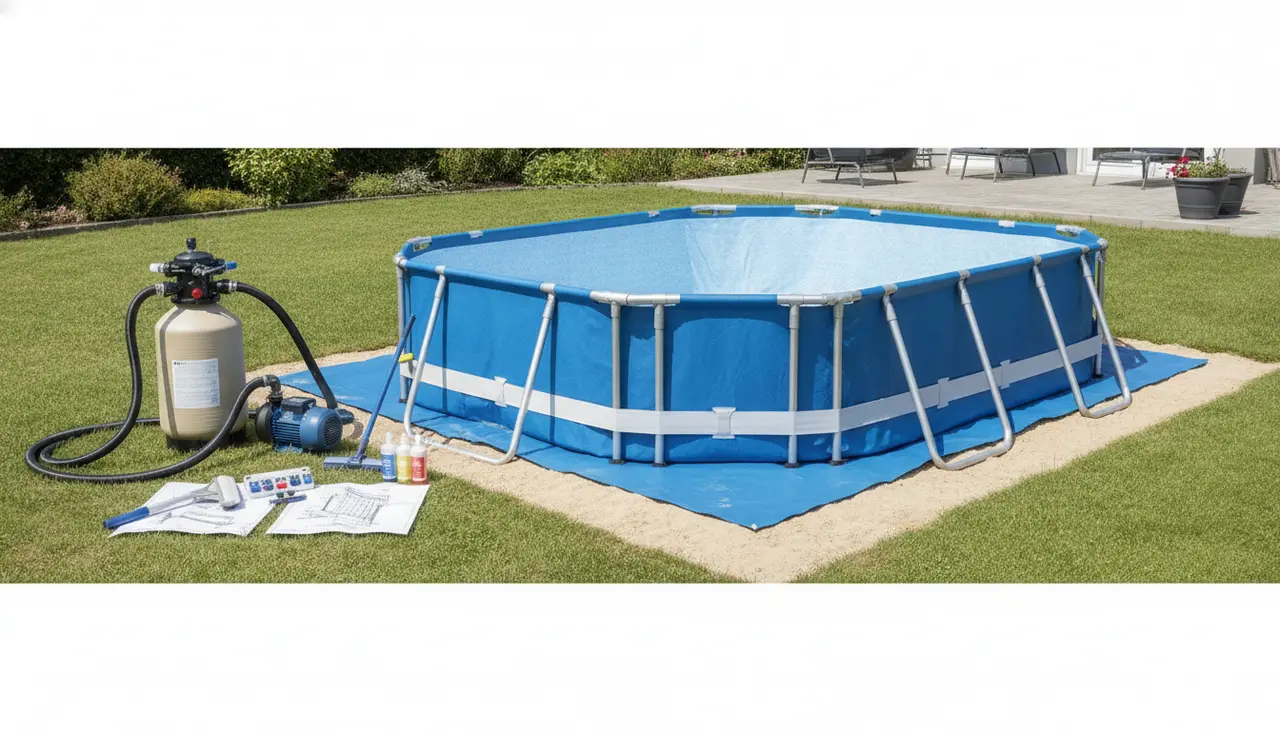
The Pool Logic Master Buying Guide: Infrastructure, Filtration, and Maintenance
Selecting an above ground pool system requires a technical understanding of structural load, hydraulic efficiency, and material science. To ensure a lifespan exceeding 10–15 years, property owners must prioritize the "infrastructure triad": a rigid, corrosion-resistant frame, an appropriately scaled filtration system, and a precision-fitted liner. Neglecting any of these components leads to premature structural failure or water quality degradation.
This guide serves as the foundational decision framework for Pool Logic. It is designed for property owners who prioritize measurable data and technical specifications over aesthetic marketing. Whether you are installing a high-end resin-framed system or upgrading a standard steel kit, the following logic applies to all above ground pool infrastructure.
The Decision Framework: Infrastructure First
Before purchasing any equipment, you must evaluate three core variables:
- Structural Load & Material: Will the frame support 50,000+ pounds of water pressure while resisting environmental corrosion?
- Hydraulic Capacity: Can the pump and filter cycle the entire volume of the pool at least twice in an 8-hour window?
- Component Compatibility: Do the plumbing diameters, liner types, and chemical delivery systems match the structural materials (e.g., saltwater compatibility)?
Structural Frame Comparison
The frame is the skeleton of your pool. Its material composition determines the pool’s resistance to rust, UV degradation, and chemical exposure.
| Frame Material | Corrosion Resistance | Lifespan Expectancy | Saltwater Compatible | Best Use Case |
|---|---|---|---|---|
| Galvanized Steel | Moderate (Zinc-coated) | 5–10 Years | No | Budget-conscious, freshwater setups. |
| Resin (High-Impact) | High (Non-metallic) | 15+ Years | Yes | High-humidity areas or saltwater systems. |
| Hybrid (Steel/Resin) | High (Resin components) | 10–15 Years | Partial | Balancing cost with durability in key areas. |
| Aluminum | Excellent (Oxide layer) | 20+ Years | Yes | Permanent installations in harsh climates. |
Filtration System Specifications
A pool is only as clean as its filtration logic. The three primary media types—Sand, Cartridge, and Diatomaceous Earth (DE)—offer different levels of particulate removal measured in microns.
- Sand Filters (20–40 Microns): The most durable and lowest maintenance option. Best for large pools where ease of "backwashing" outweighs the need for ultra-fine filtration.
- Cartridge Filters (10–15 Microns): Offers superior water clarity without the need for backwashing. Ideal for areas with water restrictions, though cartridges require manual cleaning and periodic replacement.
- Diatomaceous Earth (2–5 Microns): The highest level of filtration available. Removes the finest debris but requires the most technical maintenance and the handling of DE powder.
Strategic Use Cases
Best for Saltwater Systems: Full Resin or Aluminum Frames Salt is highly corrosive to standard galvanized steel. If you intend to use a chlorine generator (salt system), you must select a frame with no exposed steel components. Look for UV-resistant resin top rails and uprights.
Best for Large Volume (24ft+ Circular or Oval): Sand Filtration Larger pools manage higher debris loads. A high-capacity sand filter (e.g., Hayward ProSeries or Pentair Sand Dollar) provides the flow rate necessary to prevent stagnant zones in high-volume structures.
Best for Cold Climates: Steel with Winterization Kits Steel frames provide excellent rigidity against ice expansion, provided they are properly winterized and the water level is managed to prevent stress on the skimmer box.
Technical Tradeoffs and Considerations
- Liner Thickness (Mil vs. Gauge): Do not confuse "mil" with "gauge." A 20-mil liner is a specific measurement (0.020 inches), whereas "gauge" is a marketing term that varies by manufacturer. For maximum puncture resistance, prioritize true 20-mil or 25-mil virgin vinyl.
- Pump Horsepower (HP) vs. Flow Rate: A common mistake is buying a 2 HP pump for a small pool. This creates excessive pressure that can blow out seals and damage filter laterals. Match the pump's GPH (Gallons Per Hour) to your filter’s maximum flow rating.
- Plumbing Diameter: Standard kits often use 1.25-inch or 1.5-inch flexible hoses. For permanent installations, upgrading to 1.5-inch or 2-inch rigid PVC piping reduces hydraulic friction and improves pump efficiency.
Common Beginner Mistakes to Prevent
- Foundation Variance: The ground must be level within 1 inch across the entire diameter. A slope greater than 1 inch puts uneven hydraulic pressure on the "downhill" wall, risking a structural blowout.
- Liner Installation Temperature: Never install a vinyl liner in temperatures below 60°F (15.5°C). The vinyl loses its elasticity, leading to "wrinkle-setting" or tearing during the initial fill.
- Undersized Filtration: Manufacturers often bundle pools with the minimum viable filter. Upgrading to a filter one size larger than recommended reduces pump strain and chemical consumption.
- Neglecting the Ground Cloth: Placing a liner directly on sand or dirt without a geotextile barrier or "Gorilla Pad" allows nutgrass to grow through the vinyl and promotes "floor pitting."
Essential Infrastructure Checklist
- [ ] Site Prep: Clear all sod; level with a transit or laser level; install a 2-inch masonry sand base.
- [ ] Frame Assembly: Ensure all vertical uprights are perfectly plumb. Use a torque wrench to meet manufacturer specifications on wall bolts.
- [ ] Sealing: Apply waterproof silicone to the skimmer and return gaskets to prevent wall rot.
- [ ] Bonding: For permanent metal-framed pools, ensure the structure is electrically bonded according to local NEC (National Electrical Code) standards.
Frequently Asked Questions
Q: Can I use a sand filter with a saltwater system? A: Yes. Sand filters are highly compatible with saltwater. However, ensure your pump has a mechanical seal designed for salt-heavy environments to prevent premature motor failure.
Q: What is the difference between an Overlap and a Unibead liner? A: Overlap liners drape over the wall and are secured with coping strips; they are more forgiving of slightly uneven walls. Unibead (or J-Hook) liners clip directly to the top of the wall, providing a professional, integrated look but requiring precise wall height.
Q: How often should I replace my pool's filtration media? A: Sand should be replaced every 3–5 years. Cartridges typically last 1–3 seasons depending on debris load. DE grids should be inspected annually and replaced if the fabric shows signs of fraying.
Affiliate Disclosure: This guide contains links to specialized pool hardware. If you purchase through these links, Pool Logic may earn a commission at no additional cost to you. We focus on technical specifications and manufacturer reliability to assist in your procurement process.