
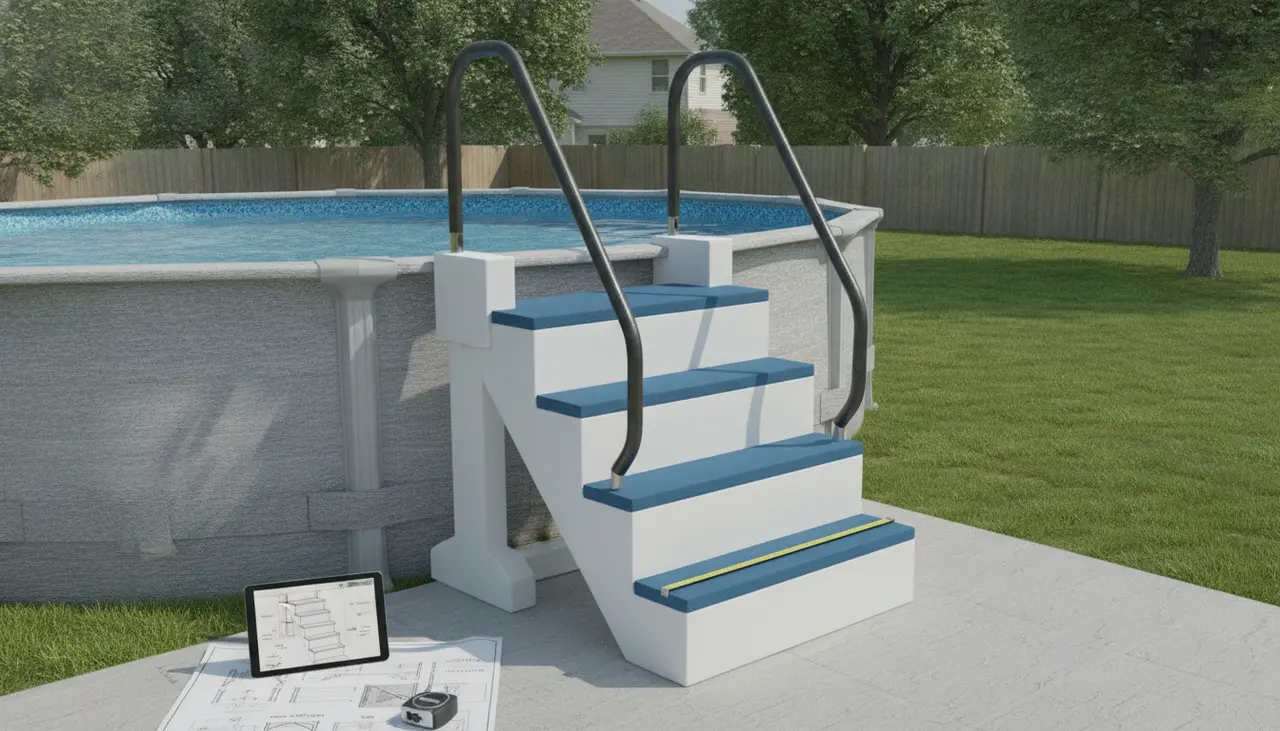
Best Ladder and Step Systems for High Walls: A Technical Guide to Stability and Safety
Disclosure: This post contains affiliate links. If you purchase through these links, we may earn a commission at no additional cost to you.
For above ground pools with wall heights of 48, 52, or 54 inches, the standard ladders included in many retail kits often lack the structural rigidity required for long-term use. The most stable solution for high-walled pools is a dedicated drop-in step system or a heavy-duty A-frame ladder with a wide-tread base. These systems use UV-resistant polyethylene or resin and are designed to support weights between 300 and 500 pounds while minimizing liner friction.
When selecting above ground pool steps, the priority must be the interface between the step base and the pool liner, as well as the height adjustability of the handrails to ensure they clear the top rail of the pool frame without causing structural stress.
Who This Guide Is For
This technical analysis is for property owners who have already installed or are planning an above ground pool with a depth of at least 48 inches. It focuses on hardware that interfaces with galvanized steel, resin, and aluminum frames, providing solutions for users who require higher weight capacities and better slip resistance than entry-level ladders offer.
Comparison of High-Wall Entry Systems
| System Type | Typical Weight Capacity | Max Wall Height | Footprint Width | Best Surface Use |
|---|---|---|---|---|
| Drop-In Steps | 400 - 500 lbs | 54" | 30" - 42" | Flat bottom, heavy use |
| A-Frame Ladder | 300 lbs | 54" (Adjustable) | 18" - 24" | Limited space, basic access |
| Wedding Cake Steps | 500 lbs | 54" | 42"+ | High stability, circular pools |
| Deck-to-Pool Steps | 400 lbs | Variable | 30" | Pools with adjacent decks |
Top-Tier Solutions for High-Wall Stability
Best for High Weight Capacity: The Wedding Cake System
Wedding cake steps feature a rounded, tiered design that provides the largest footprint of any above ground pool entry system.
- Specifications: Often rated for up to 500 lbs.
- Material: High-density, UV-stabilized polyethylene.
- Utility: The wide base prevents the steps from "wobbling" or tipping, which is a common failure point in narrow ladders. Most models include a perforated design that allows water to circulate behind the steps, preventing algae blooms.
- Pros: Exceptional stability; easy for pets or those with limited mobility.
- Cons: Large footprint takes up significant swim space; requires heavy ballast (usually 40-50 lbs of sand).
Best for Versatility: The Adjustable A-Frame Safety Ladder
For pools without a surrounding deck, a heavy-duty A-frame is the standard. Look for models like the Confer 7200 or similar resin-based adjustable ladders.
- Specifications: Fits 48" to 54" walls.
- Safety Feature: Look for a "roll-guard" or lockable outer section that prevents unauthorized access when the pool is not in use.
- Utility: These systems straddle the pool wall. The interior side should have a minimal footprint to protect the liner, while the exterior side should have a wide base for ground stability.
- Pros: No deck required; height-adjustable legs for uneven ground.
- Cons: Lower weight capacity (usually 300 lbs) compared to drop-in steps.
Best for Deck Integration: Straight Drop-In Steps
If you have a deck built flush to the top rail of your pool, a straight drop-in step system is the most efficient choice.
- Specifications: Dual handrails that bolt directly to the deck surface.
- Anti-Slip Specs: Look for deep-molded treads and "soft-step" padding on the bottom to prevent liner abrasion.
- Pros: Very secure when bolted to a deck; takes up less horizontal space than wedding cake styles.
- Cons: Requires a permanent deck structure for mounting.
Technical Installation Requirements
- Ballast Management: Most drop-in steps require internal weight to prevent floating. Use clean, kiln-dried sand or dedicated weights. Never use gravel or sharp-edged stones, as these can puncture the liner if the step housing cracks.
- Liner Protection: Regardless of the manufacturer's claims, always place a dedicated ladder pad (a high-density vinyl or rubber mat) under the steps. This prevents the "sandpaper effect" where the movement of the steps wears down the liner over time.
- Electrical Safety: If your ladder system includes metallic components or integrated LED lighting, it may require bonding to your pool's existing electrical grid. For more on this, see our Pool Electrical Safety: A Comprehensive Guide to Bonding, Grounding, and Inspections.
Common Beginner Mistakes to Prevent
- Ignoring Wall Height: Buying a 48-inch ladder for a 52-inch pool will result in the ladder "hanging" off the top rail, which can bend the pool frame or cause the ladder to collapse.
- Inadequate Ballast: Failing to fill the steps with the recommended amount of sand leads to shifting. This shifting causes the steps to rub against the liner, eventually leading to leaks.
- Tightening Hardware on Cold Liners: If you are installing steps during a liner replacement, ensure the water has reached at least 70°F. Cold liners are less elastic and more prone to tearing under the concentrated weight of a new step system.
- Neglecting Water Circulation: Solid-back steps can trap stagnant water. Ensure your steps have side vents or "flow-through" designs to allow chlorinated water to reach the area behind the steps.
Frequently Asked Questions
Can I use in-ground pool steps in an above ground pool? No. In-ground steps are typically designed to be built-in or rely on specific mounting hardware that is not compatible with the thin-walled structure of above ground pool frames.
How do I prevent algae from growing inside my pool steps? Choose steps with perforated treads and side openings. During your weekly maintenance, use a brush to agitate the water behind and inside the steps to ensure sanitizer (chlorine/bromine) is reaching those areas.
Do I need a ladder pad if my steps have smooth bottoms? Yes. Micro-movements occur every time someone climbs the steps. Over a season, even a smooth plastic surface can cause "pitting" or thinning of the vinyl liner.
For more information on structural components and protecting your pool's integrity, check our guide on Solar Cover Thickness Guide: 8mm vs 12mm to see how step placement can affect your cover's performance.