
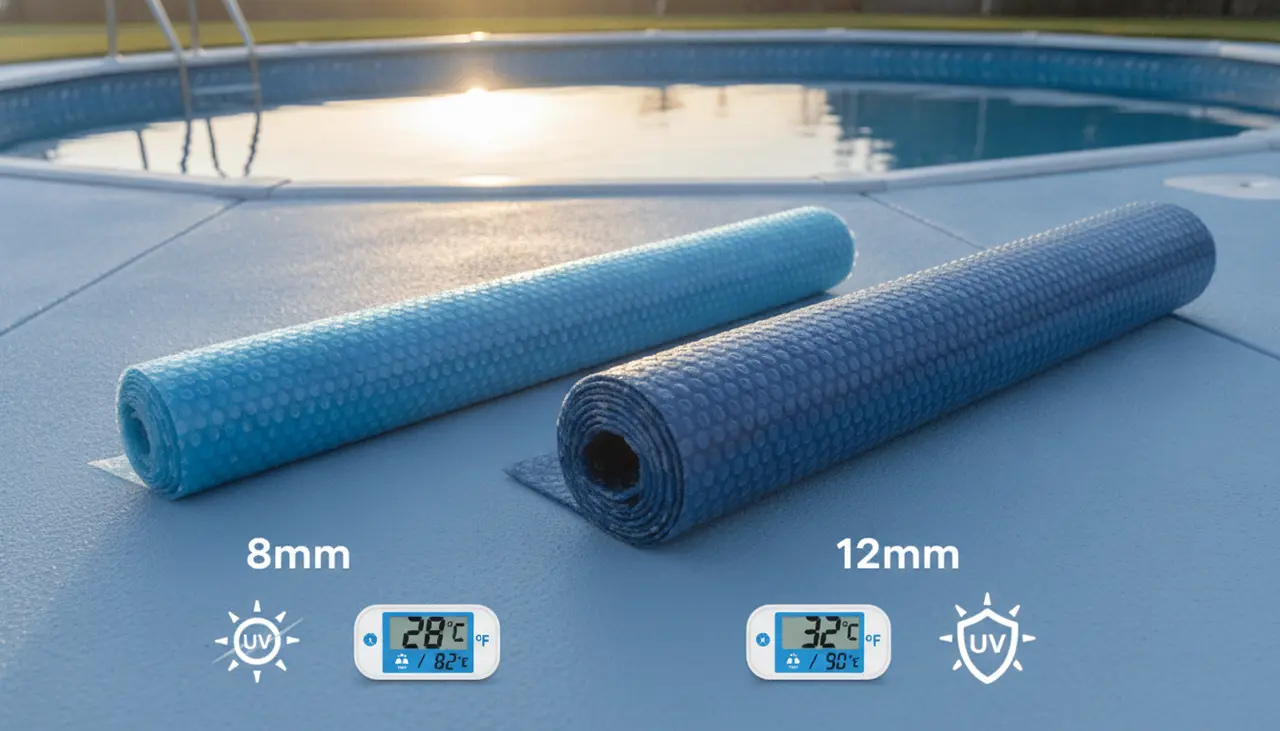
Solar Cover Thickness Guide: 8mm vs 12mm
The Direct Answer: Which Thickness is Best?
For most above ground pool owners, a 12-mil (often referred to as 12mm in consumer guides) solar cover is the optimal choice. It provides a 15–20% increase in heat retention compared to 8-mil covers and offers significantly higher resistance to UV degradation and chemical wear. While 8-mil covers are lighter and easier to handle manually, they typically require replacement every 1–2 seasons due to material thinning.
A 12-mil cover acts as a more effective thermal barrier, reducing evaporation by up to 95% and maintaining water temperatures 8–15 degrees Fahrenheit higher than an uncovered pool. For those using a solar reel, the added weight of the 12-mil material is negligible, making it the superior long-term investment for structural maintenance and energy efficiency.
Introduction: The Logic of Thermal Retention
Selecting the best solar pool cover is not merely about finding a plastic sheet to top your pool; it is an exercise in thermal engineering. Above ground pools are particularly susceptible to heat loss through evaporation and convection because their walls are exposed to ambient air.
This guide is designed for property owners who need to maximize their swimming season without over-investing in mechanical heating. We will analyze the technical differences between entry-level 8mm/mil covers and heavy-duty 12mm/mil blankets, focusing on material density, UV stabilization, and structural longevity.
Note: In the pool industry, thickness is technically measured in "mils" (thousandths of an inch), though many consumer brands use "mm" interchangeably in marketing. This guide addresses the standard 8 and 12 units of thickness found in the above ground market.
Technical Comparison: 8-Mil vs. 12-Mil Solar Covers
| Feature | 8-Mil (Standard) | 12-Mil (Heavy Duty) | 16-Mil (Ultra) |
|---|---|---|---|
| Heat Retention | Moderate (5-8°F gain) | High (10-15°F gain) | Maximum (12-18°F gain) |
| UV Resistance | Low; prone to flaking | High; UV-stabilized resin | Very High |
| Weight (per sq. ft.) | ~0.05 lbs | ~0.08 lbs | ~0.11 lbs |
| Expected Lifespan | 1–2 Seasons | 3–5 Seasons | 5+ Seasons |
| Ease of Handling | High (Manual) | Moderate (Reel Recommended) | Low (Reel Required) |
Deep Dive: 8-Mil Solar Covers
The 8-mil solar cover is the entry-level standard for above ground pool kits. It is constructed from a lightweight polyethylene resin.
Best For:
- Short swimming seasons (3 months or less).
- Small circular pools (12ft to 15ft) where a reel is not used.
- Users who prioritize ease of removal and storage over maximum heat gain.
Pros:
- Weight: Extremely easy to fold and move by a single person.
- Cost: Lowest barrier to entry for evaporation control.
- Transparency: Often higher light transmission, which can help with initial surface heating.
Cons:
- Durability: The "bubbles" (thermal cells) are thinner and more susceptible to popping or "shedding" plastic into the filtration system.
- Heat Loss: Thinner material allows more thermal energy to escape during cool nights.
Deep Dive: 12-Mil Solar Covers
The 12-mil cover is the professional recommendation for those seeking a balance between utility and durability. This thickness is thick enough to resist the "delamination" common in cheaper covers.
Best For:
- Standard above ground sizes (18ft, 24ft, or Oval configurations).
- Regions with significant temperature swings between day and night.
- Pools equipped with a permanent solar reel system.
Pros:
- Thermal Mass: The thicker plastic holds heat more effectively, acting as a true insulator.
- Chemical Resistance: Better stands up to the oxidizing effects of chlorine and shock treatments.
- Longevity: The UV-inhibitors are more densely packed in the resin, preventing the material from becoming brittle.
Cons:
- Weight: Can be cumbersome to handle manually on pools larger than 18ft.
- Storage: Requires more physical space when folded or rolled.
Operational Efficiency and Hardware Compatibility
When upgrading to a 12-mil or 16-mil cover, the infrastructure of your pool becomes a factor. A heavy-duty cover retains more water when lifted, increasing the "drag weight."
To ensure your filtration system remains clear while using a cover, refer to The Science of Pool Filtration: Optimizing Pump Flow for Crystal Clear Water to understand how surface debris management interacts with cover usage.
Reel Systems: For any cover over 18ft in diameter, a high-quality resin or aluminum reel is recommended. This prevents the "dragging" of the cover over the top rail, which can lead to abrasions on both the cover and the pool's structural frame.
Common Beginner Mistakes
- Leaving the Cover on During Shocking: High chlorine levels (above 5ppm) will eat through the UV coating and weaken the thermal cells. Leave the cover off for at least 24 hours after a chemical shock.
- Incorrect Bubble Orientation: The bubbles must face down. The flat side faces the sky. The bubbles trap air to insulate and create surface area for heat transfer into the water.
- Storing in Direct Sunlight: When the cover is off the pool and folded/rolled, it can act as a magnifying glass. If left in the sun, the internal heat can reach temperatures that melt the layers together. Always use a white UV-protective storage sheet.
- Neglecting Water Balance: Low pH or high acidity can cause the plastic to lose elasticity, leading to premature cracking. For a broader look at maintenance hardware, see The Pool Logic Master Buying Guide: Infrastructure, Filtration, and Maintenance.
FAQ: Solar Cover Specifications
Does color matter as much as thickness? While thickness (12-mil vs 8-mil) dictates durability and insulation, color affects heat absorption. Clear covers allow more UV rays to penetrate deep into the water (better for heating deep water), while blue or opaque covers are better at trapping heat in the top layer and preventing algae growth by blocking light.
How do I know when my solar cover needs replacing? The primary indicator is "flaking." If you find small circles of blue plastic in your hair or your skimmer basket, the UV inhibitors have failed, and the material is disintegrating.
Can I trim a solar cover to fit my above ground pool? Yes. Solar covers are designed to be trimmed with standard household scissors. It is best to let the cover "relax" on the water for 24 hours to remove packing creases before making your final cuts around the perimeter.
Affiliate Disclosure: This guide contains affiliate links for solar covers and reel systems. If you purchase through these links, Pool Logic may earn a commission at no additional cost to you. We only recommend hardware that meets our structural and durability specifications.