
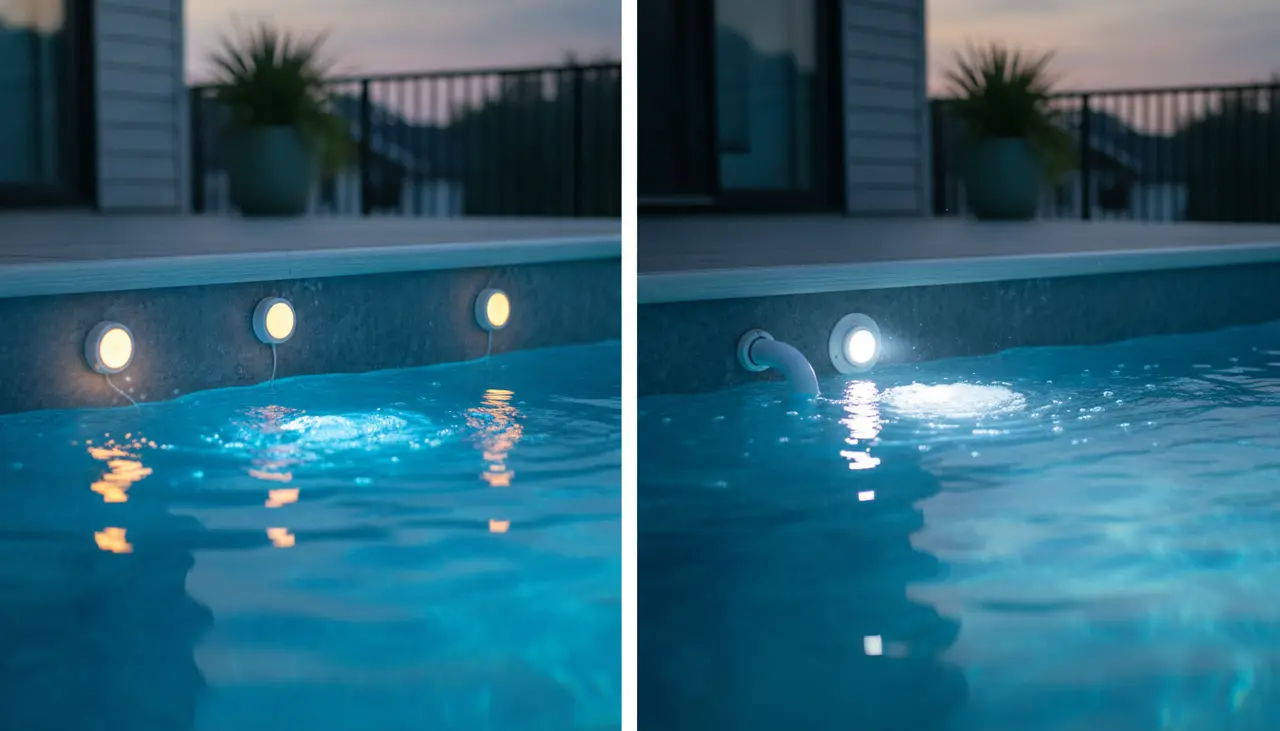
LED Lighting Kits for Above Ground Walls: Magnetic vs. Return-Line Comparison
Choosing the right illumination for an above ground pool requires balancing brightness requirements against the structural integrity of the pool wall and liner. Unlike in-ground systems that are built into masonry, above ground lighting must account for vinyl liner sensitivity and external power routing.
The most effective "above ground pool lights" fall into two primary categories: Magnetic Induction Lights and Return-Line Mounts. Magnetic systems offer tool-free installation using electromagnetic energy transfer through the liner, while return-line systems replace the existing water return fitting to provide a fixed, high-output light source.
Buyer-Intent Overview
This guide is designed for property owners who have already established their pool’s structural frame and are now looking to integrate a permanent or semi-permanent lighting solution. We focus on hardware specifications, lumen output, and installation logic for steel-frame and resin-frame pools.
Lighting Hardware Comparison
| Feature | Magnetic Induction (e.g., Intex) | Return-Line LED (e.g., Hayward/Pentair) | Submersible Suction/Tape |
|---|---|---|---|
| Mounting Method | Magnetic through-wall | Replaces return jet fitting | Suction cup or adhesive |
| Installation Time | < 5 Minutes | 20–40 Minutes | < 2 Minutes |
| Power Source | 120V Plug (Transmitter) | 12V Transformer | Battery or 12V Cord |
| Light Output | Moderate (Ambient) | High (Directional) | Low (Accent) |
| Structural Risk | Zero (No holes) | Low (Uses existing hole) | Zero |
| Best For | Steel wall pools | Permanent plumbing setups | Temporary/Seasonal use |
Magnetic Induction Lighting: The No-Drill Solution
Magnetic pool lights, popularized by brands like Intex, utilize a two-part system. A transmitter is placed on the exterior of the pool wall, and the LED light unit is placed directly opposite it on the interior.
- How it works: The exterior unit plugged into a GFCI outlet sends electricity via induction through the vinyl liner to the interior light. There are no physical wires passing through the pool wall.
- Structural Advantage: This is the safest option for maintaining the integrity of the pool liner and wall. It eliminates the risk of leaks associated with through-wall hardware.
- Technical Limitation: These do not work on resin-walled pools or pools with exceptionally thick wall slats, as the magnetic field cannot bridge the gap effectively. They are optimized for standard 20-30 gauge vinyl liners.
Return-Line Mounts: Integrated Filtration Lighting
Return-line lights are engineered to replace the "eyeball" fitting where filtered water re-enters the pool. This is a strategic location because the hole in the wall and liner already exists.
- Installation Logic: You must drain the water below the return line, unscrew the existing fitting, and install the light-integrated return. The power cord typically runs through the plumbing or along the exterior wall to a transformer.
- Flow Dynamics: When selecting a return-line light, ensure the fitting does not significantly restrict GPM (gallons per minute). If you are using high-efficiency hardware, refer to our guide on Variable Speed vs Single Speed Pool Pumps: An Above Ground Efficiency Comparison to ensure your flow rate remains adequate for filtration.
- Pros: Very stable and provides the brightest, most "built-in" look for above ground pools.
Key Technical Specifications to Monitor
- IP Rating: Ensure any light carries an IP68 rating, meaning it is rated for long-term submersion under pressure.
- Voltage: Most modern above ground systems use a 12V transformer to step down power from a 120V outlet. This is a critical safety feature.
- Cord Length: Measure the distance from your nearest GFCI outlet to the furthest point of the pool. Most kits provide 25–50 feet of cabling.
Electrical Safety and Grounding
When installing any electrical component near water, safety is the priority. All lighting systems must be plugged into a Class A GFCI (Ground Fault Circuit Interrupter). For a deep dive into the requirements for bonding and grounding your pool equipment, see Pool Electrical Safety: A Comprehensive Guide to Bonding, Grounding, and Inspections.
Common Beginner Mistakes
- Ignoring Wall Material: Attempting to use magnetic lights on a resin-frame pool. The thickness of resin uprights and walls often exceeds the magnetic reach of the induction coil.
- Improper Cord Routing: Leaving power cords where they can be tripped over or damaged by lawn equipment. Use conduit or cord protectors where possible.
- Over-tightening Return Fittings: When installing return-line lights, over-tightening the nut can crack the plastic housing or pinch the liner, leading to slow leaks.
- Neglecting Winterization: Failing to remove magnetic or clip-on lights before the ice sheet forms can result in crushed hardware or torn liners.
FAQ: Above Ground Pool Lighting
Q: Can I use LED lights in a saltwater above ground pool? A: Yes, but you must ensure the hardware is rated for salt. Resin-encased LEDs are preferred over those with exposed metal screws to prevent galvanic corrosion.
Q: How many lights do I need for a 24ft round pool? A: For standard ambient lighting, one high-output return-line light or two magnetic induction lights are usually sufficient. For high-visibility "resort style" lighting, three units spaced evenly are required.
Q: Do I need to drain the pool to install these? A: For magnetic lights, no. For return-line lights, you only need to drain the water a few inches below the return jet to prevent water loss during the swap.
Affiliate Disclosure: This post contains affiliate links for pool lighting hardware. If you purchase through these links, Pool Logic may earn a commission at no additional cost to you. Our recommendations are based on technical specifications and manufacturer durability data.