
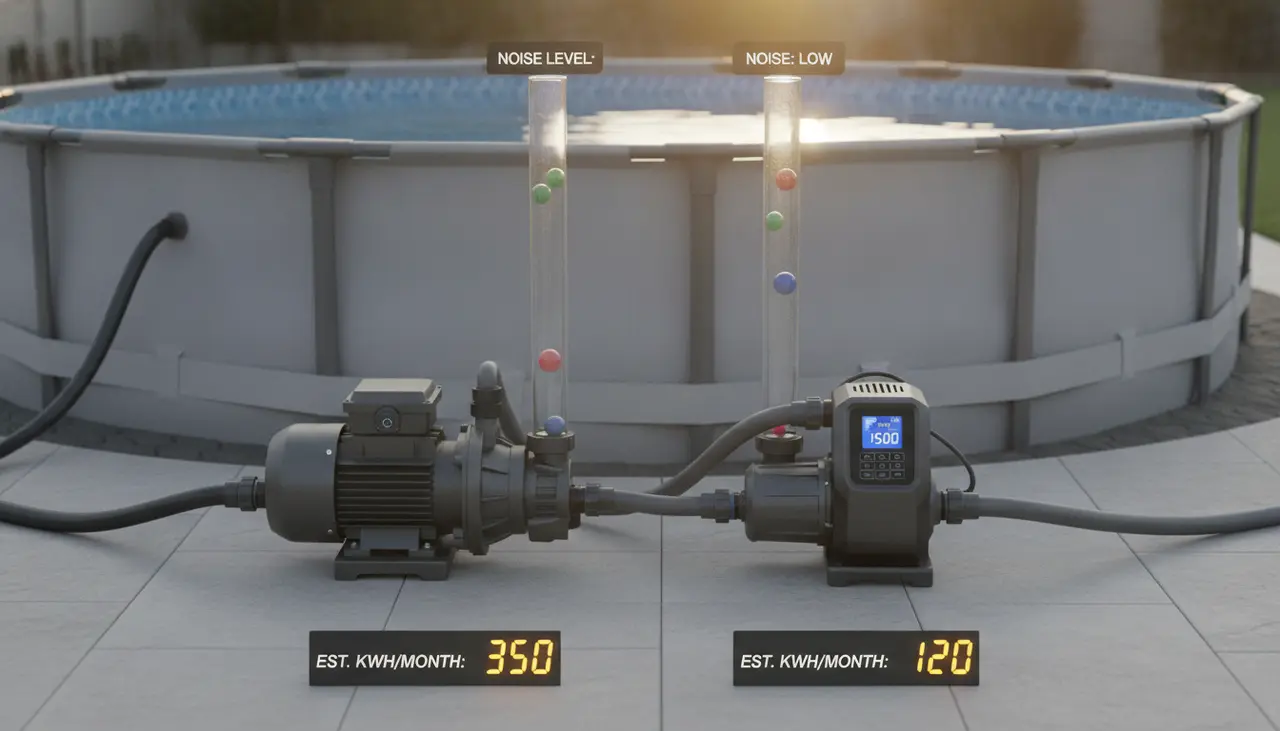
Variable Speed vs Single Speed Pool Pumps: An Above Ground Efficiency Comparison
Disclosure: This post contains affiliate links. We may earn a commission if you make a purchase through these links at no additional cost to you.
For most above ground pool owners, the choice between a variable speed (VS) and a single speed (SS) pump comes down to a balance of upfront cost versus long-term operational savings. A variable speed pump is the superior technical choice for energy efficiency, offering up to 90% savings on electricity and significantly quieter operation. However, a single speed pump remains a viable, low-cost solution for smaller seasonal pools or setups where simplicity is prioritized over advanced automation.
This guide analyzes the mechanical specifications, electrical consumption, and filtration logic required to make an informed decision for your specific pool volume and plumbing configuration.
Who This Guide Is For
This comparison is designed for property owners managing above ground pool systems who are either:
- Replacing a failed motor and evaluating upgrade options.
- Building a new high-performance filtration stack for a permanent steel or resin frame pool.
- Seeking to reduce the high monthly electrical overhead associated with standard induction motors.
Technical Specification Comparison
| Feature | Single Speed Pump | Variable Speed Pump |
|---|---|---|
| Motor Type | Induction (Fixed RPM) | Permanent Magnet (Adjustable RPM) |
| Typical RPM | 3,450 RPM | 600 – 3,450 RPM |
| Noise Level | 70–80 dB (Loud) | 45–55 dB (Quiet at low speeds) |
| Energy Efficiency | Low (High amperage draw) | High (DOE Compliant) |
| Filtration Quality | Standard | High (Slower flow = better media capture) |
| Upfront Cost | $250 – $500 | $700 – $1,400+ |
The Mechanics of Flow and Efficiency
The primary differentiator between these two systems is the Affinity Laws of centrifugal pumps. These laws state that power consumption is proportional to the cube of the shaft speed.
If you reduce the pump speed by half, the power consumed is reduced by an eighth. A single speed pump operates at a fixed, high RPM (usually 3,450). While this moves water quickly, it creates high friction loss in the plumbing and consumes maximum wattage regardless of whether you are vacuuming the pool or simply circulating water.
In contrast, a variable speed pump allows you to drop the RPM for daily filtration. Running a pump at 1,725 RPM (half speed) for twice as long moves the same volume of water as a single speed pump but uses a fraction of the electricity. For a deeper understanding of how flow rates impact your water quality, see our guide on The Science of Pool Filtration: Optimizing Pump Flow for Crystal Clear Water.
Noise Level Specifications
Noise is a critical factor for above ground pools, which are often located closer to patios or neighboring property lines than in-ground counterparts.
- Single Speed: Operates at a constant hum roughly equivalent to a loud vacuum cleaner or a garbage disposal.
- Variable Speed: At low filtration speeds, these pumps are virtually silent, often registering below 50 decibels—equivalent to a quiet conversation or a refrigerator hum.
Best Use Cases for Above Ground Pools
Best for Seasonal/Budget Setups: Single Speed Pumps
If you utilize a smaller, temporary frame pool (such as an Intex or Bestway 12ft to 15ft model) that is disassembled every winter, a single speed pump is often the most logical choice. The lower initial investment aligns with the shorter lifespan of these pool types.
- Hardware Tip: Ensure the pump is matched to your filter's maximum flow rate to prevent internal damage to the lateral assembly or cartridge.
Best for Permanent Structures and Saltwater Systems: Variable Speed Pumps
For 24ft to 33ft circular pools or large oval resin-frame pools, a variable speed pump is a high-yield investment.
- Saltwater Compatibility: Saltwater chlorine generators require a specific minimum flow rate to function. A VS pump can be tuned to the exact lowest RPM required to trigger the flow switch, maximizing the life of the salt cell and minimizing energy waste.
- Electrical Safety: Regardless of the pump type, all above ground pool equipment must adhere to strict NEC codes. For details on wiring and grounding, refer to Pool Electrical Safety: A Comprehensive Guide to Bonding, Grounding, and Inspections.
Practical Tradeoffs
Single Speed Tradeoffs:
- Pros: Low purchase price; easy to repair; simple "on/off" operation via basic mechanical timers.
- Cons: High utility bills; high noise; shorter motor life due to heat buildup at high RPMs.
Variable Speed Tradeoffs:
- Pros: Massive energy savings (often paying for itself in 2-3 seasons); extremely quiet; programmable schedules for different tasks (e.g., higher speed for skimming, lower for filtration).
- Cons: High initial cost; complex digital interfaces; sensitive electronics may require surge protection.
Common Beginner Mistakes to Prevent
- Oversizing the Pump: Many owners believe a 2 HP pump is "better" than a 1 HP pump. In above ground pools, an oversized pump can blow out a sand filter lateral or crack a cartridge manifold due to excessive pressure.
- Ignoring Voltage Requirements: Ensure your pump matches your outlet. Most above ground pumps are 115V, but high-performance VS pumps may require 230V.
- Neglecting Surge Protection: Variable speed pumps contain sensitive drive controllers. Failing to use a dedicated surge protector can result in a costly board failure during a lightning storm.
FAQ: Above Ground Pump Comparison
Q: Can I replace my current single speed pump with a variable speed pump without changing my filter? A: Generally, yes. As long as the plumbing diameter (usually 1.5 inches for above ground pools) and the maximum flow rate of the filter are respected, a VS pump is a "drop-in" upgrade.
Q: How much money can I actually save? A: Depending on your local kilowatt-hour (kWh) rate, a VS pump can save between $300 and $700 per season compared to a standard 1.5 HP single speed pump.
Q: Is a VS pump necessary for a sand filter? A: It is highly beneficial. Sand filters perform better at lower flow rates because the water has more contact time with the sand, allowing for the capture of finer particles.
Q: Do variable speed pumps work with automatic cleaners? A: Yes. You can program a "high speed" cycle for 2-3 hours a day to provide the suction needed for a vacuum, then return to "low speed" for the remainder of the day.