
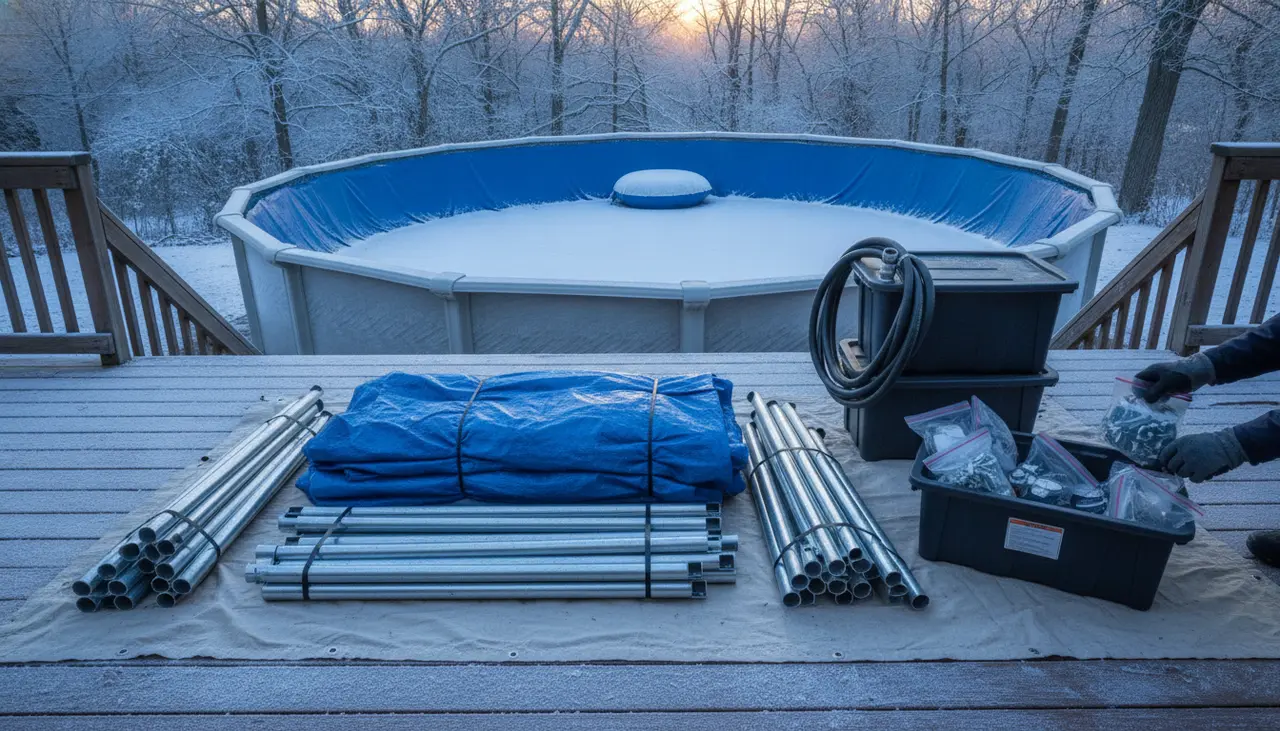
The Professional Guide to Winterizing Above Ground Pool Hardware: Structural Protection and Component Storage
To winterize an above ground pool effectively, you must isolate the filtration system, balance the water chemistry to prevent liner staining, and install an ice compensator (air pillow) to protect the structural walls. The process focuses on preventing the "ice lens" from expanding outward against the pool’s frame, which can cause catastrophic structural failure or liner tears.
Proper winterization ensures that external hardware—such as pumps, hoses, and chlorinators—is drained and stored in a climate-controlled environment to prevent PVC cracking and seal degradation. Failure to remove water from these components often leads to internal expansion and housing ruptures during the first hard freeze.
Who This Guide Is For
This guide is designed for property owners with permanent or semi-permanent above ground pools (steel, resin, or aluminum frames). If you live in a region where the temperature drops below 32°F (0°C), these technical specifications are required to maintain the structural integrity of your pool kit and filtration investment.
Winterization Hardware Comparison
Choosing the right equipment for the off-season is a matter of calculating snow load and local temperature minimums.
| Hardware Component | Function | Best Material/Spec | Primary Benefit |
|---|---|---|---|
| Air Pillow | Ice expansion relief | 16-gauge to 24-gauge Vinyl | Prevents wall buckling |
| Winter Cover | Debris/UV protection | Polyethylene (Triple-laminated) | Prevents algae and liner fading |
| Skimmer Plug | Port sealing | UV-resistant rubber or plastic | Eliminates need to drain pool low |
| Winterizing Plug | Pipe sealing | Nylon or Rubber Expansion | Prevents pipe/fitting bursts |
Step 1: Filtration and Pump Decommissioning
The most common hardware failures occur within the pump housing and filter tank. Before the first freeze, you must ensure no standing water remains in the system.
- Drain the Pump: Disconnect the pump from the power source. Remove the drain plugs at the bottom of the strainer pot and the volute.
- Filter Maintenance: For sand filters, set the multiport valve to "Winterize" and remove the bottom drain cap. For cartridge filters, remove the element, clean it, and store it indoors.
- Storage: Store the pump and any detached hoses in a dry, insulated area. This is an ideal time to inspect your equipment. For those using high-efficiency units, refer to our guide on Variable Speed vs Single Speed Pool Pumps: An Above Ground Efficiency Comparison to evaluate if your hardware is due for an upgrade during the spring.
- Internal Plumbing: If you have hard-plumbed PVC, use a shop vac to blow air through the lines to ensure no water is trapped in low points.
Step 2: Structural Frame and Liner Protection
The "Structural Frames" of above ground pools are under constant tension. When water freezes, it expands by approximately 9%. Without an air pillow, this force is directed entirely against the pool walls.
- Air Pillow Installation: Inflate the pillow to roughly 60-70% capacity. Do not over-inflate, as the pillow needs "give" to compress when the ice pushes against it. Center the pillow in the pool using nylon strings anchored to the top rails.
- Water Level Management: If you are not using a skimmer faceplate cover (like an Aquador), you must drain the water 4-6 inches below the skimmer intake. However, do not drain the pool more than halfway, as the weight of the water is necessary to keep the liner seated and the frame stable against wind.
- Chemical Buffering: Ensure your pH is between 7.2 and 7.6 and your Alkalinity is 80-120 ppm. This prevents the water from becoming corrosive to the metal frame components and the vinyl liner over the winter months. Proper flow before shutdown is critical; see The Science of Pool Filtration: Optimizing Pump Flow for Crystal Clear Water for data on ensuring chemicals are fully distributed.
Step 3: Securing the Winter Cover
A winter cover is not just for keeping leaves out; it prevents the "freeze-thaw" cycle from introducing excessive weight to the top rails.
- Solid Covers: These prevent all light and debris from entering but require a cover pump to remove meltwater and rain.
- Mesh Covers: These allow water to pass through but block large debris. These are better for high-wind areas but require more chemical correction in the spring.
- Installation: Drape the cover over the air pillow. Secure the perimeter using a cable and winch system. Note: Never use bricks or cinder blocks to weigh down the cover; if they fall, they will destroy the liner and potentially damage the structural wall.
Use-Case Recommendations
- Best for High Snow Load Regions: Solid covers with a dedicated 1200 GPH (gallons per hour) automatic cover pump.
- Best for Budget-Conscious Maintenance: Standard 8-stitch polyethylene covers paired with 4x4 ft air pillows.
- Best for Longevity: Using a skimmer faceplate sealer to keep water levels high, which provides maximum structural support for the pool walls against external wind pressure.
Common Beginner Mistakes to Prevent
- Over-inflating Air Pillows: An over-inflated pillow will pop under the pressure of ice, leaving the pool walls unprotected.
- Leaving Hoses Attached: Water trapped in the "U-bend" of corrugated hoses will freeze and split the plastic.
- Neglecting the Cover Pump: Allowing 6 inches of water to sit on top of a solid cover puts thousands of pounds of stress on the top rails and uprights, leading to frame collapse.
- Closing Too Early: If you close the pool while the water is still above 60°F, you risk massive algae blooms before the freeze sets in.
Winterization FAQ
Q: Do I need to add anti-freeze to my above ground pool? A: Only in the plumbing lines if they are hard-plumbed and cannot be fully drained. Never use automotive anti-freeze; use non-toxic propylene glycol (RV/Pool anti-freeze).
Q: Can I leave my saltwater cell outside? A: No. Salt cells contain sensitive electrolytic plates that can be damaged by extreme cold and expanding ice. Disconnect and store them indoors.
Q: How many air pillows do I need? A: For a circular pool up to 24ft, one 4x8ft or two 4x4ft pillows are sufficient. For oval pools, use two or three pillows spaced evenly to break up the ice sheet.
Affiliate Disclosure: This post contains affiliate links for winter covers, air pillows, and skimmer plugs. If you purchase through these links, Pool Logic may earn a commission at no additional cost to you. We recommend hardware based on technical specifications and manufacturer durability data.